The massive elephant’s diet is as monumental as its size. They are constant foragers, consuming hundreds of kilograms of food daily to fuel their bodies. As the largest land mammals, their enormous intake profoundly impacts their behavior, habitat, and survival. The question arises: “What do elephants eat?”
This article explores the elephant diet, examining why these herbivores need vast amounts of vegetation and how their eating habits shape ecosystems. We will cover their food groups, water needs, and the unique biology supporting their high-fiber intake.
Key Takeaways
- Is an elephant a herbivore? Elephants are strict herbivores, needing 150-300 kg of vegetation daily. They spend up to 80% of their day foraging due to their inefficient digestion.
- What do elephants eat? Their diverse diet is elephant-habitat-dependent, shifting from grazing on grasses (wet season) to browsing on leaves and bark (dry season).
- What does an elephant eat? Essential food sources also include fruits, roots, and soil (for necessary minerals).
- Elephants use their trunks, tusks, and specialized molar progression to manage their tough diet.
What Do Elephants Eat?
What do elephants eat? Their diet is incredibly diverse, consisting primarily of grasses, tree bark, leaves, and soft shoots. Depending on the season and location, they also seek out roots, shrubs, and wild fruits to ensure they get the necessary nutrients.
Elephants, due to their massive size and Elephant Weight (1,800 kg to over 6,000 kg) and a digestive system that only processes 40% to 60% of what they eat, must consume a huge volume of food. How much does an elephant eat in a day? An adult can eat 150 to 300 kilograms of vegetation daily.
Consequently, elephants are almost constant foragers, spending 16 to 18 hours (nearly 80% of the day) searching for and eating food. Ethical sanctuaries prioritize a natural environment to allow this essential foraging behavior for the elephants’ mental and physical health.
Main Diets for Elephants
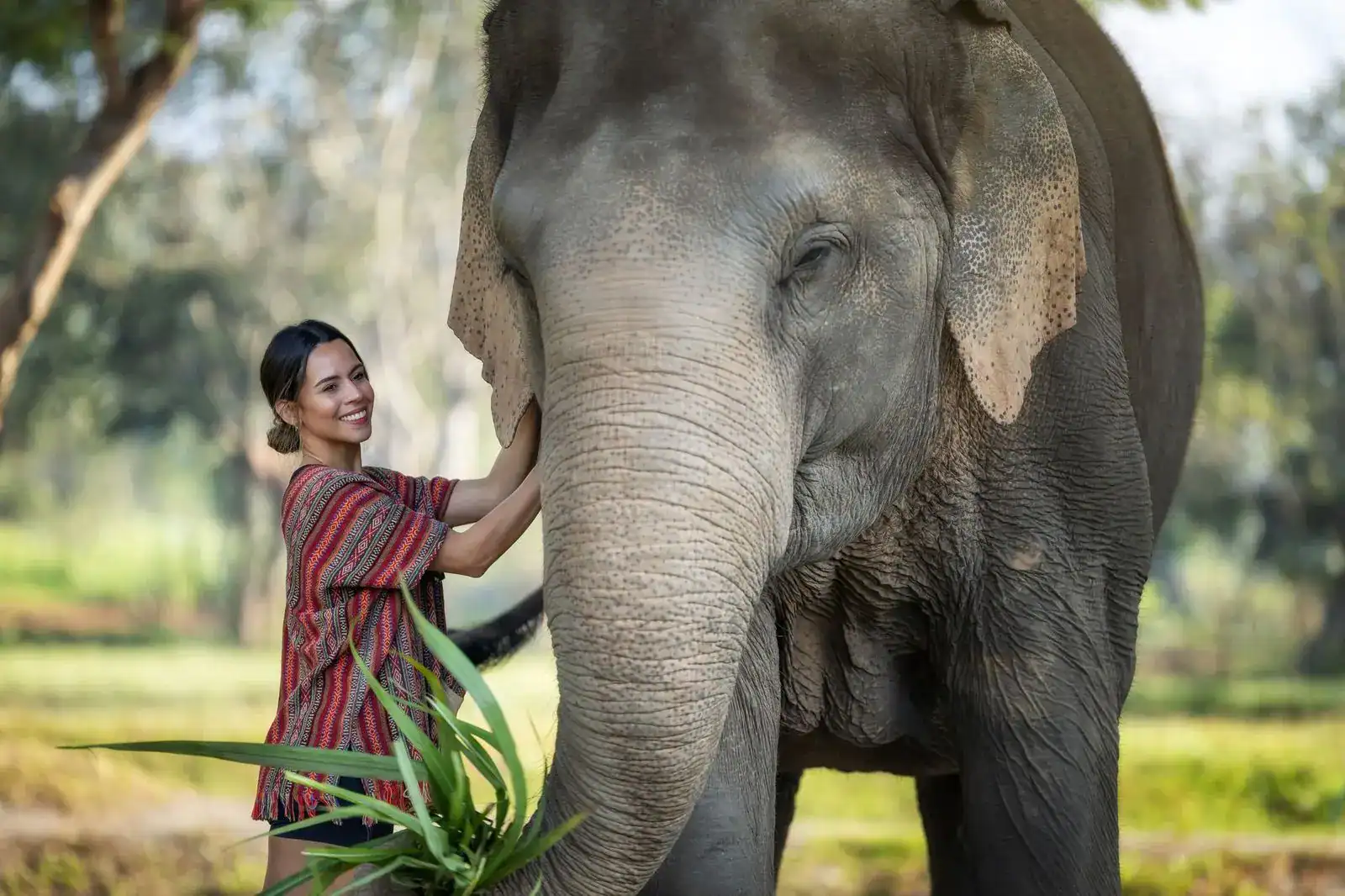
Understanding the elephant food chain begins with a simple question: Are elephants herbivores? Yes, they are strict herbivores, meaning they derive all their energy from plant-based materials.
While they are generalist feeders that can consume over 400 different species of plants, their specific elephant habitat largely dictates what is on the menu. For example, the Asian elephant diet in the lush forests of Southeast Asia differs from the African bush elephant diet found on the open savannas. Let’s explore what do elephants eat:
Grasses
Do elephants eat grass? Elephants primarily eat grasses and forbs, especially in the wet season. These high-fiber wild grasses, abundant in their savanna or grassland habitat, form a large part of their diet. They use their trunks to skillfully pluck or gather the vegetation.
Fruits
Elephants, the national animal of Thailand, primarily love fruit, their “sweet tooth” driving them to seek seasonal treats like mangoes, figs, and marula fruits. In Thai culture, they are sometimes linked to agricultural raids, drawn to high-calorie crops such as bananas and sugar cane. Although nutritious, fruit is a secondary food source compared to their main diet of grasses and bark.
Leaves and Twigs
What do elephants eat during the dry season when grass is scarce? The elephant’s diet switches to browsing on leaves and twigs from shrubs and trees. This is key to the African forest elephant’s diet, as their dense habitat offers woody plants year-round. They use their trunks to pull down branches and their flat molars to grind the fibrous wood, a behavior vital for health during changing weather.
Roots
What do elephants eat in the wild? When food is scarce, elephants use their feet and Elephant Tusk to dig for nutrient-rich roots and bulbs. This learned behavior, often passed down from matriarchs, provides essential starch and minerals, showcasing the elephant’s adaptability to environmental challenges.
Soil
Surprisingly, elephants practice geophagy—intentionally eating soil—to obtain essential minerals like salt, calcium, and potassium missing from their herbivorous diet. They dig into specific geological formations or termite mounds. In some areas, African elephants have even created deep hillside caverns over generations to access these vital mineral licks, which are necessary for proper body function and digestion.
Water Intake for Elephants
Beyond what elephants eat, water is perhaps the most critical component of their daily survival. An adult elephant requires a massive amount of hydration, typically consuming between 68.4 to 98.8 liters (18 to 26 gallons) of water daily. In some instances, a single elephant may drink up to 152 liters (40 gallons) if they have been traveling long distances in the heat.
The Elephant Trunk is a masterpiece of natural engineering used for both eating and drinking. It can hold up to 4 to 8 liters of water at once, which the elephant then sprays into its mouth. New research shows that elephants can dilate their nostrils to create more space, allowing them to suck up water at speeds 30 times faster than a human sneeze.
When Do Elephants Usually Eat?
Elephants do not follow a typical “three meals a day” schedule like humans; instead, they are almost constant feeders. Because their bodies are so large and their digestion is so inefficient, they must eat for 16 to 18 hours per day to meet their caloric needs. While they are primarily diurnal, meaning they are active during the day, they are also known to be active and feed during the hours of darkness.
Elephants’ constant feeding profoundly impacts the environment, acting as “ecosystem engineers” by felling trees to create grasslands and dispersing seeds via their incredibly important dung, which aids nutrient cycling and plant regeneration.
How Do Elephants Eat?
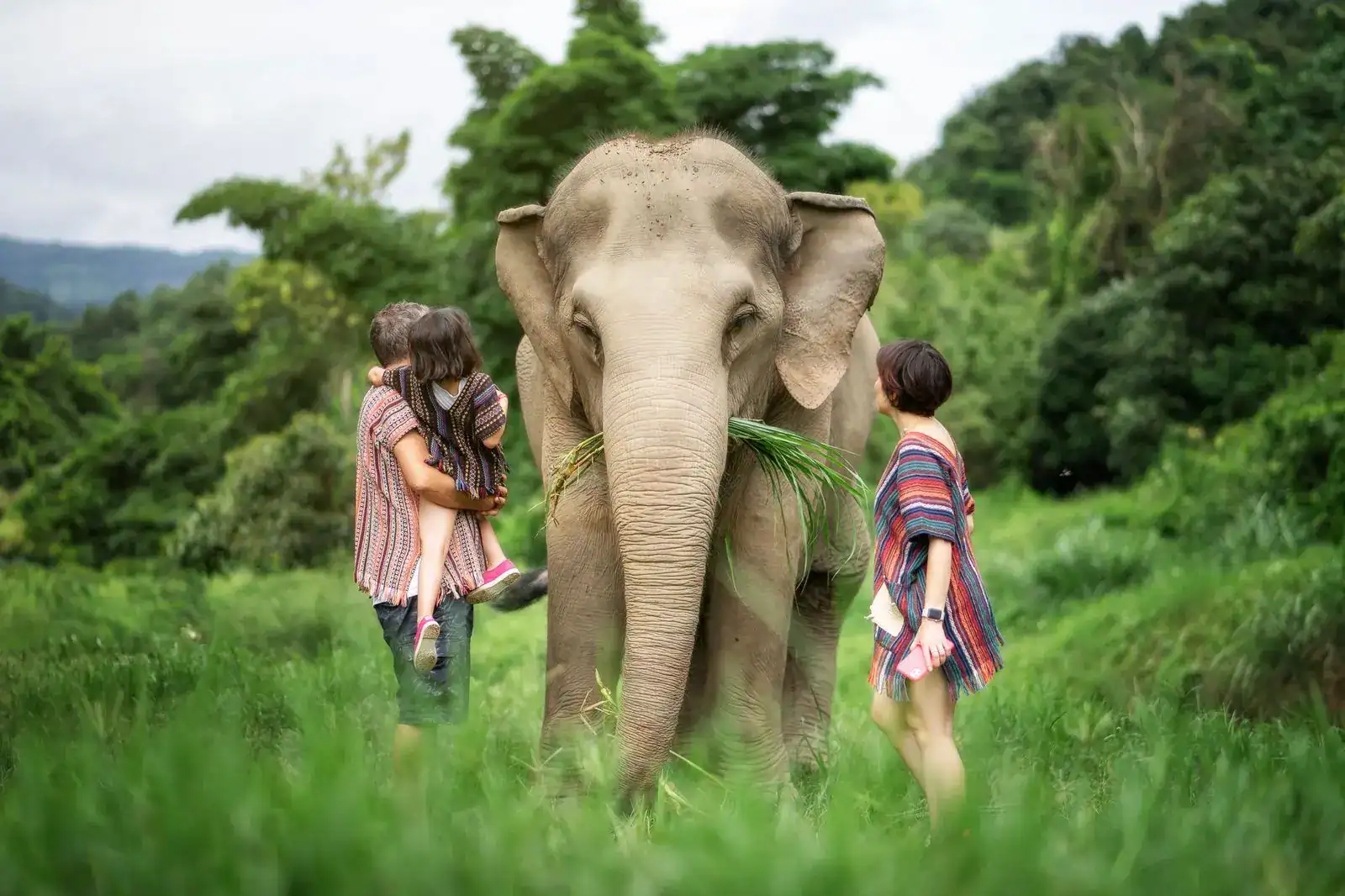
Elephants are ecosystem engineers whose survival depends on unique physical adaptations: a highly dextrous trunk with up to 150,000 muscle fascicles for tearing and delicate picking, the ability to perform suction feeding like a vacuum, and tusks (elongated incisors) for tasks like stripping bark and digging for minerals.
They also rely on molar progression (cycling through six sets of teeth) to grind fibrous plants and nostril dilation to rapidly draw in liters of water. Young elephants spend years learning these complex foraging skills from the herd.
Frequently Asked Questions (FAQs)
Do habitat influences elephants eating?
Elephant diets are habitat-dependent, as all elephants are generalist eaters. Asian elephants in Thailand eat bamboo and rainforest foliage, while African bush elephants consume savanna grasses and acacia. To reduce human-elephant conflict and protect welfare, preserving natural corridors is vital, as habitat loss drives elephants to raid crops like rice and sugarcane.
Do seasonal shifts influence elephant eating?
Elephant diets and movement are seasonal. During the wet season, high rainfall allows them to graze on grasses. When the dry season comes, they switch to browsing, eating bark and woody tree parts as greenery shrinks. Elephants typically stay within their home range while rain is sufficient, only moving when drought makes food scarce.
Do elephants eat meat?
Elephants are strict herbivores, not carnivores. Their anatomy, including flat grinding molars and the lack of claws, is adapted for processing fibrous plants. Their digestive system and biology are built to thrive on a 100% plant-based diet, and they lack hunting instincts. While they might accidentally ingest insects, elephants never intentionally hunt or eat meat.
Observing What Do Elephants Eat at Elephant Jungle Sanctuary?
What do elephants eat? Elephants are dedicated herbivores that spend up to 18 hours a day foraging to sustain their massive bodies. Due to an inefficient digestive system, they must consume vast quantities of grasses, bark, roots, and fruits, while even eating soil for essential minerals. This constant feeding cycle makes them vital “ecosystem engineers,” as they shape landscapes and disperse seeds, proving that their complex diet is fundamental to both their survival and the health of their environment.
Understanding what do elephants eat is fundamental to the mission of Elephant Jungle Sanctuary, Ethical Elephant Sanctuary. These magnificent animals must consume hundreds of kilograms of vegetation daily to sustain their health and energy. By supporting our sustainable tourism, you help us provide an ethical elephant environment where the national animal of Thailand can forage naturally.