Have you ever wondered what makes an African elephant different from its Asian cousin? While both are iconic symbols of strength and wisdom, they are distinct species, each with unique characteristics shaped by their environment. Let’s take a closer look at what sets these two incredible animals apart.
Introduction to African and Asian Elephants
African and Asian elephants are the only two surviving members of the elephant family. They share many similarities, but their separate evolutionary journeys have given them unique physical features, behaviors, and conservation needs. This guide will explore these distinctions to help you better understand and appreciate these magnificent creatures.
Physical Differences Between African and Asian Elephants
Size and Body Shape
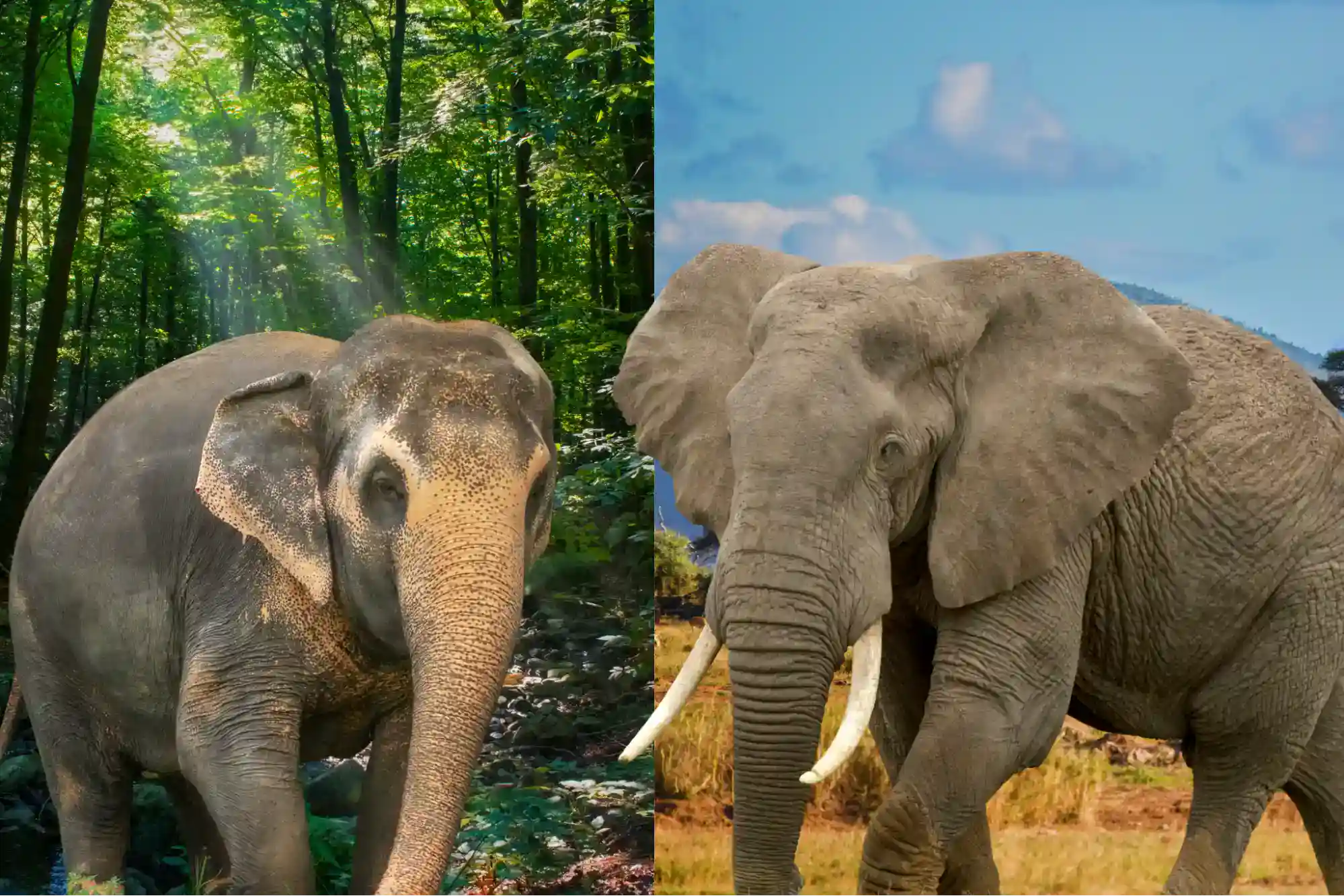
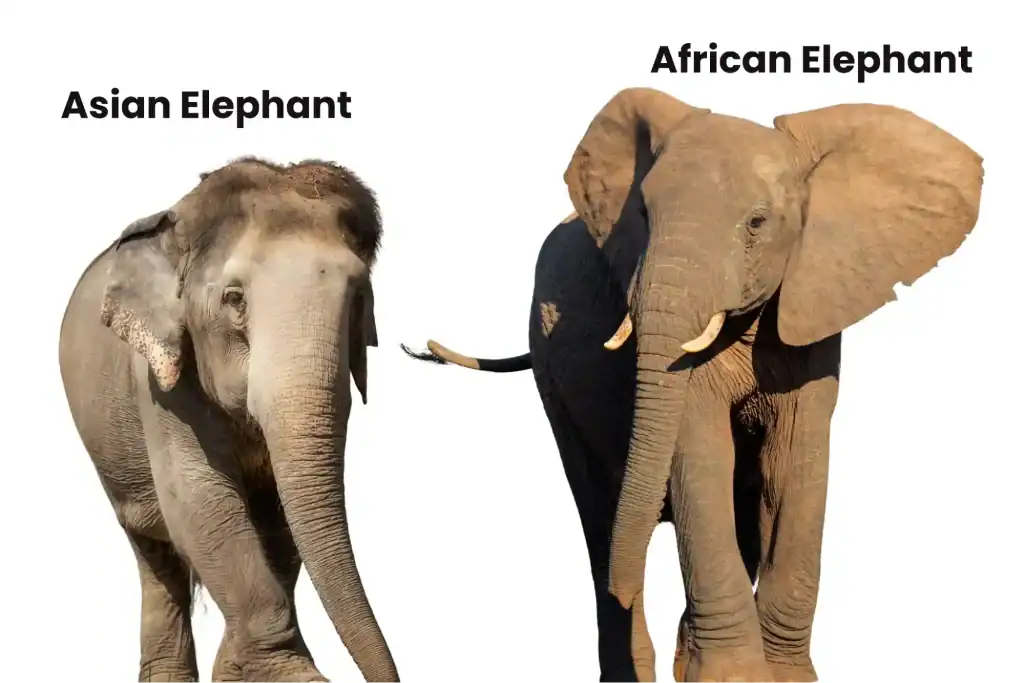
The first thing you might notice is their size. African elephants are the world’s largest land animals, with a towering height and a distinctive concave, or saddle-shaped, back. Asian elephants are a bit smaller, with a more convex or flat back.
Ear Size and Shape
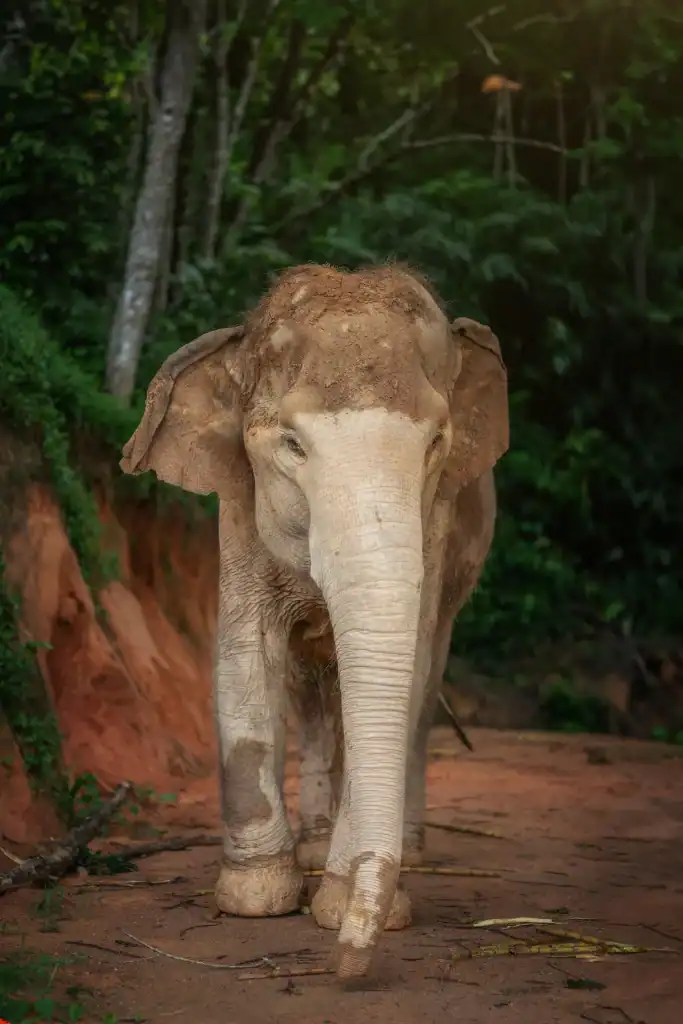
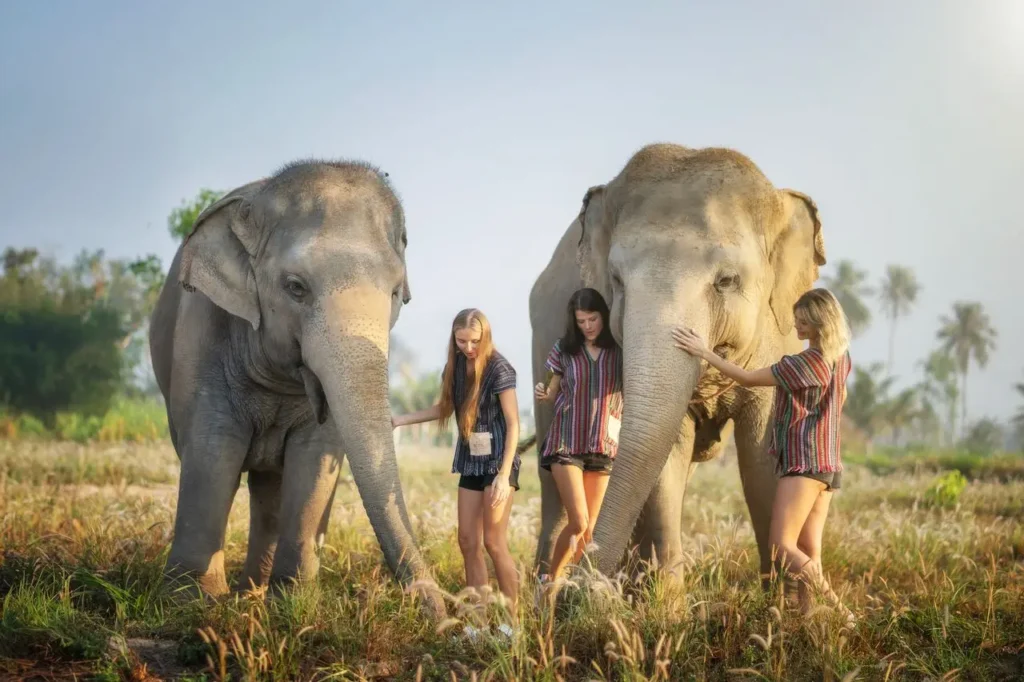
This is the easiest way to tell them apart! African elephants have massive ears that are shaped like the continent of Africa itself, which they use to cool down in the hot savanna heat. Asian elephants have smaller, rounder ears.
Tusks and Trunk
With African elephants, both males and females typically have tusks. For Asian elephants, however, only a small percentage of males have tusks, and females usually have either very small tusks called “tushes” or none at all. You can also spot a difference in their trunks: an African elephant’s trunk has two “fingers” at the tip, while an Asian elephant’s has only one.
Habitat and Geographic Distribution
African elephants roam across the savannas and forests of 37 countries in sub-Saharan Africa. They are well-adapted to hot, arid climates. Asian elephants are found in fragmented habitats across 13 countries in South and Southeast Asia, preferring lush forests and grasslands with abundant water.
Behavioral Differences
Both species are highly social, but their social structures differ. African elephant herds can be much larger, with up to 70 individuals, and are led by a matriarch. Asian elephant herds are typically smaller. Their diets also differ: African elephants are primarily grazers, eating grasses and leaves, while Asian elephants are browsers, preferring fruits, roots, and tree bark.
Conservation Status and Threats
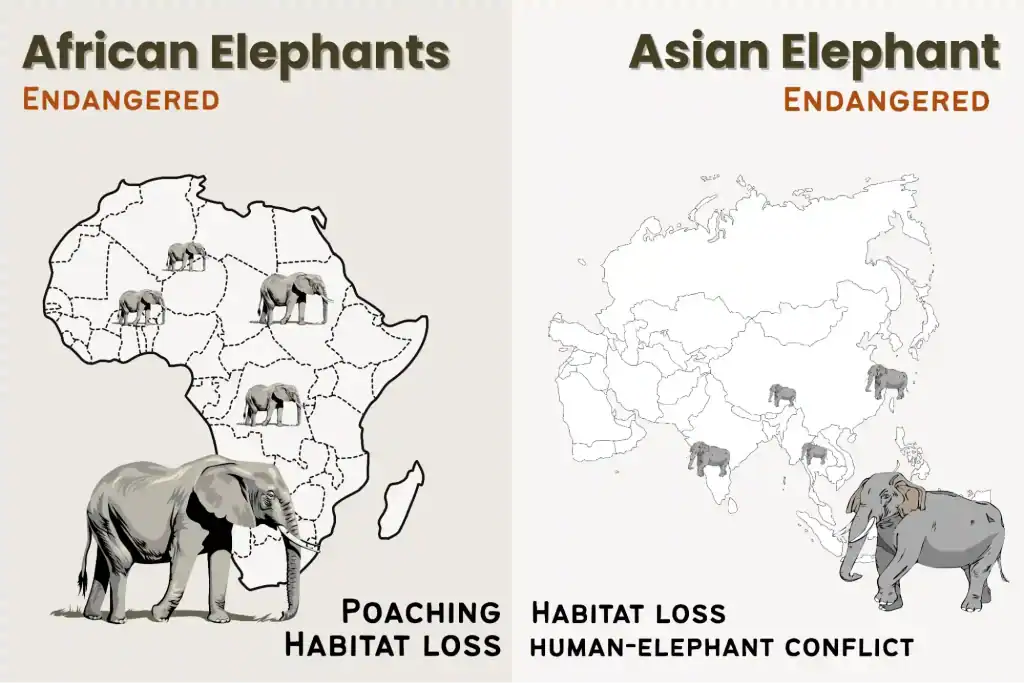
Both species face significant threats, though their conservation statuses differ. The African elephant is listed as Endangered by the IUCN, primarily due to the ongoing poaching crisis for ivory and habitat loss. The Asian elephant is listed as Endangered and faces threats primarily from habitat loss, human-elephant conflict, and illegal trade.
Role of EJS (Elephant Jungle Sanctuary) in Elephant Conservation
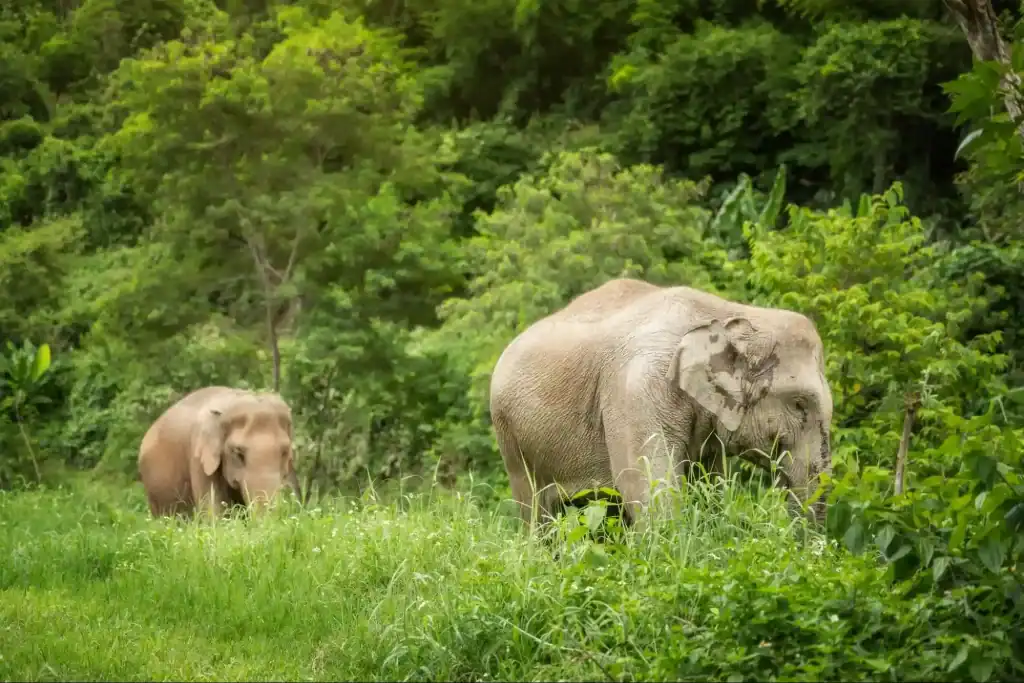
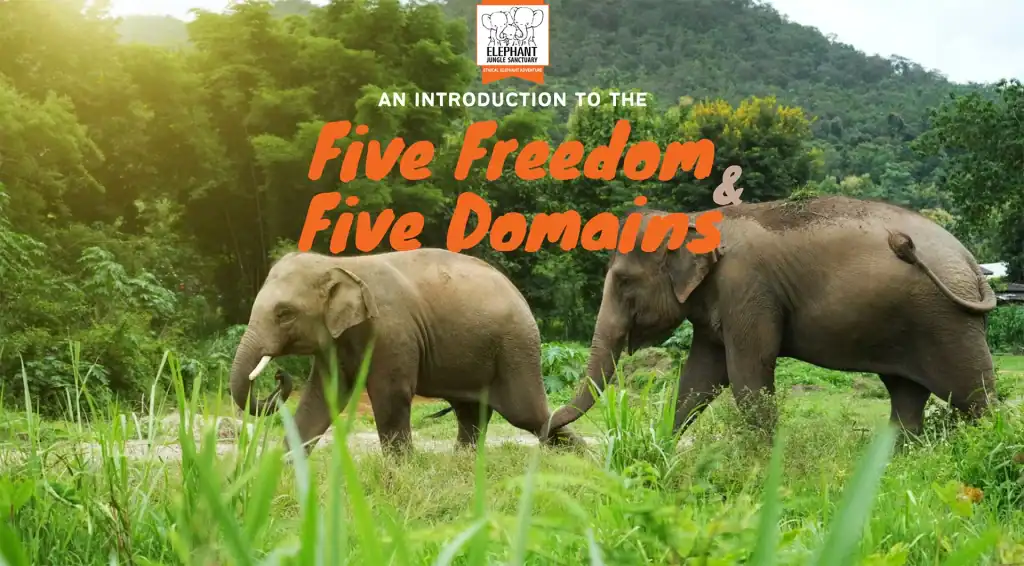
The Elephant Jungle Sanctuary (EJS) focuses specifically on the conservation and welfare of Asian elephants. The sanctuary provides a safe, natural, and protected environment for these magnificent creatures, with a strong emphasis on ethical tourism. By supporting EJS, visitors contribute directly to the health care and well-being of Asian elephants, helping to secure a better future for the species.
Conclusion
African and Asian elephants, though related, are distinct species with unique physical features, behaviors, and conservation needs. By understanding and appreciating these distinctions, we can better support conservation efforts for both species and ensure their survival for generations to come. Visit the Elephant Jungle Sanctuary, learn more about Asian elephants, and see how your visit makes a difference!